Skip to the content

Understanding and troubleshooting the Genie S-120 and S-125 telescopic boom lifts is essential for maintaining uptime on high-stakes job sites. Whether you are operating the heavy-duty S-100HD or the standard S-105, these machines rely on a sophisticated Electronic Control Module (ECM) system to communicate health and safety status. When the machine stops mid-motion or refuses to start, the first thing an operator or technician sees is a numeric or alphabetical code on the ground control LCD display (62374GT).
This guide explores the diagnostic systems of the S-120/S-125 series, common hardware failures that trigger error codes, and how to source the correct replacement parts using your machine's specific serial number.
The Diagnostic Heart: TCON and PCON ECMs
The Genie Super Boom series utilizes two primary "brains": the Turntable Controller (TCON) and the Platform Controller (PCON).
TCON (Turntable Controller): Located at the ground controls, the latest versions often use the ECM kit (T109430GT). This module processes data from the engine, hydraulic pumps, and safety limit switches.
PCON (Platform Controller): Located in the platform control box, often utilizing PCB assembly (146390GT). It manages operator inputs via the joysticks and toggle switches.
If these modules cannot communicate, the machine will throw a "Communication Fault." This is often caused by damage to the wire harnesses, such as the TCON J5 Power harness (101888GT) or the Shipyard Boom Cable (T106485GT).
Identifying Faults: The Fault Code Decal
Genie provides a dedicated roadmap for troubleshooting directly on the machine. Every S-120 and S-125 is equipped with a Fault Code Decal (T110549GT or T110549CSGT). This decal is usually located near the ground control box and lists specific numeric codes corresponding to system failures.
Pro Tip: If your decal is faded or missing, it is a safety violation. Replacing it with a fresh Fault Code Decal is the first step in a professional maintenance program.
Common Fault Categories and Solutions
1. Safety Limit Switch Faults
The S-120/125 series reaching heights of 125 feet requires a complex network of limit switches to ensure the machine is in a stable configuration before allowing certain functions.
Symptoms: Boom extension stops at a certain point, or the machine refuses to lift.
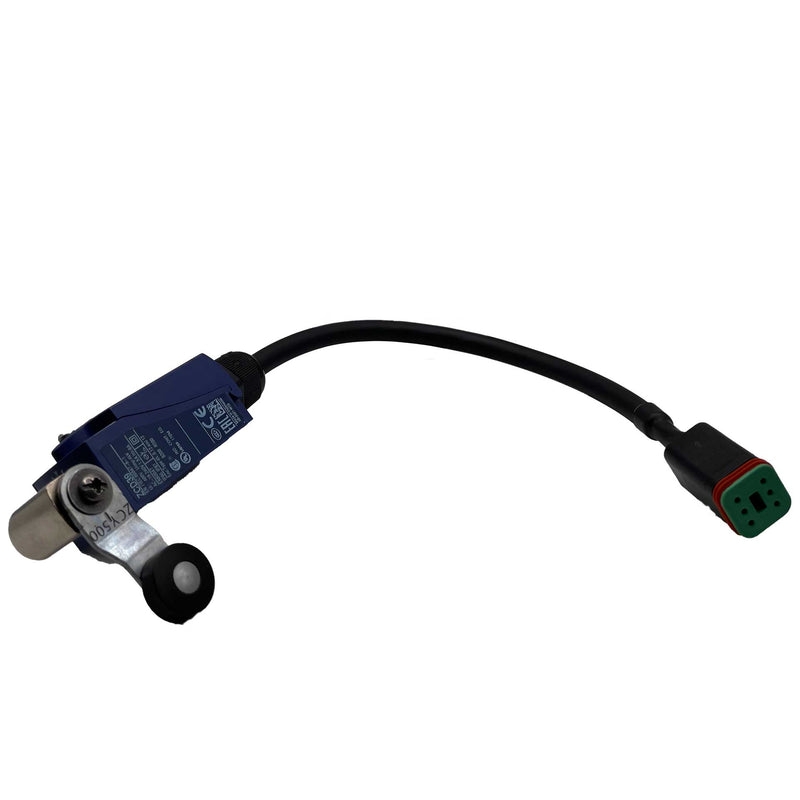
Common Culprits: The Safety Limit Switch (146198GT) and the Operational Limit Switch (75037GT) are frequent failure points.
The Solution: Inspect the limit switch rollers (128636GT). In harsh environments like shipyards, these rollers can become flat-spotted or seized by grit. If the ECM detects the switch is "Open" when it should be "Closed," it will trigger a safety fault. Ensure the limit switch mount (61185GT) is not bent, preventing the switch from tripping.
2. Tilt and Leveling Errors
Stability is paramount. If the machine is on a slope exceeding its rated capacity, the Tilt Sensor (50161GT) will trigger an alarm and cut out drive/lift functions.
Symptoms: Constant alarm at ground or platform; drive functions disabled.
The Solution: First, ensure the machine is on a firm, level surface. If the error persists on level ground, the tilt sensor may need recalibration or replacement. Check the Platform Leveling Cylinder (50207GT) and its counterbalance valves (31106GT) to ensure the platform itself is level.
3. Joystick Calibration and Faults
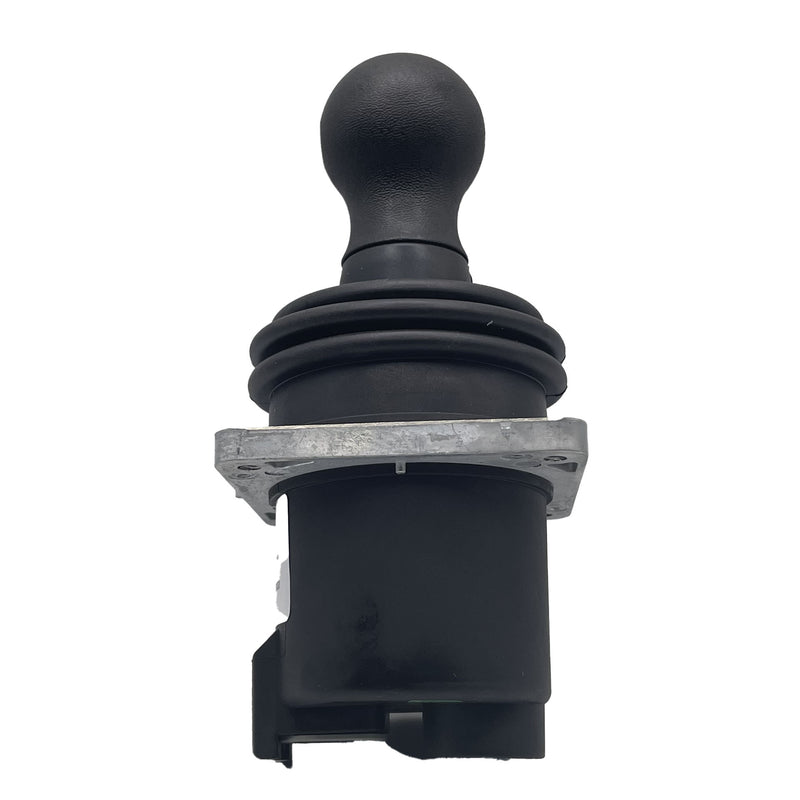
Modern Genie lifts use Hall-effect joysticks that require precise voltage ranges. If a joystick is out of its "neutral" range at startup, the PCON will throw a fault.
Common Parts: 2-Axis Joystick (101174GT) for drive/steer and 1-Axis Joystick (101175GT) for boom functions.
The Solution: Many "Faulty Joystick" codes are actually calibration errors. If replacement is necessary, remember that calibration is required after installation for both OEM and aftermarket joysticks. Always replace the joystick boot (139598GT) to prevent moisture from entering the electronics.
4. Load Sense System (ALC1000)
Newer models (specifically those with serial numbers after S105D-1572 or S100D-1550) utilize the ALC1000 load sensing system to prevent overloading the platform.
The Hardware: This system relies on the Load Sense Assembly (146399GT).
Symptoms: Machine won't operate, and the "Platform Overload" light is flashing.
The Solution: Check for physical obstructions under the platform or excessive debris (mud, tools) that might be adding weight. If the platform is empty and the fault remains, the load sense system may need to be zeroed or the harness (1273084GT) inspected for damage.
Engine-Specific Error Codes
The S-120 and S-125 are powered by various diesel engines, each with its own internal diagnostic system that communicates with the Genie TCON.
Deutz Models (TD2.9L4 or TD2011): These engines often throw codes related to the fuel injection pump (102581GT) or the alternator (58249GT). If the engine enters "Limp Mode," check the air cleaner filter (62425GT). A clogged filter will reduce manifold pressure and trigger a fault.
Cummins Models (B3.3T): Watch for codes related to the throttle solenoid (101957GT). If the solenoid fails to pull the engine to high RPM, the machine will feel sluggish, and a "Throttle Fault" will be recorded.
Perkins Models (1104D or 804D): These models often use specialized glow plugs (75389GT) and glow plug solenoids (75390GT). Cold start faults are common in winter; ensure your Cold Start Package (1287847GT) components, like the battery blanket (61245GT), are functional.
Technical Tips for Sourcing Parts by Serial Number
Because the S-120/125 series has a long production history, parts vary significantly by serial number. Using the wrong part can lead to persistent error codes that are difficult to clear.
Chassis Differences: Machines built to SN 403 use different axle installations than those built from SN 404. For example, the Extendable Steer Axle (61368-SGT) parts changed significantly during this transition.
Hydraulic Pump Changes: If you are experiencing "Low System Pressure" faults, ensure you are identifying the correct pump. Older S-100/120HD models might use pump 102710GT, while newer standard units use a 2-section pump (122495GT).
Drive Motor Evolution: If your drive motors are failing, note that serial numbers to 1021 often used Rexroth motors (50169GT), whereas units from SN 1085 transitioned to Sauer-Danfoss motors (101070GT). Note: You must order a specific conversion kit (139345GT) if replacing a Rexroth motor for the first time.
Conclusion: Proactive Diagnostics Drives Efficiency
The Genie S-120 and S-125 are complex machines, but most error codes can be traced back to basic mechanical wear on limit switches, joysticks, or sensors. By referencing the Fault Code Decal (T110549GT) and maintaining your machine with Genuine Genie parts, you can prevent minor issues from becoming major downtime events.
When ordering replacements, always have your full model name and serial number ready to ensure the part is compatible with your machine's specific ECM software version and hardware configuration.
Keep your fleet reaching higher—shop our full selection of Genie S-120 and S-125 replacement parts today!