Skip to the content

Genie Z-30/20N and Z-30/20N RJ articulating boom lifts are precision-engineered machines designed for navigating tight spaces and reaching challenging heights. However, even the most reliable equipment can encounter operational faults that manifest as error indicators or complete system shutdowns. At Reliable Equipment Parts, we know that understanding these issues is the first step toward a fast repair. This guide explores common system faults, their likely causes, and the specific Genie lift parts required to get your machine back in service.
The Core of the Machine: ECM and Controller Faults
The "brain" of the Genie Z-30/20N is the Electronic Control Module (ECM), which coordinates drive, steer, and boom functions [205.1, 932]. When the ECM detects a discrepancy in voltage or communication, it may trigger a fault that prevents the machine from operating.
One of the most common issues involves the Motor Controller. Depending on your machine's age and motor type, you may have an AMD or GE Sep-Ex controller. For example, machines in the serial range 3447 to 6812 typically use the T114858GT AMD controller, while those from 6813 to 12304 utilized the 128334GT GE version. A malfunctioning controller often results in a "no drive" or "no function" state. If the controller itself has failed, it must be replaced with the exact unit matching your drive motor type to ensure proper communication across the 48V DC system.
Drive System Faults: Contactors and Brushes
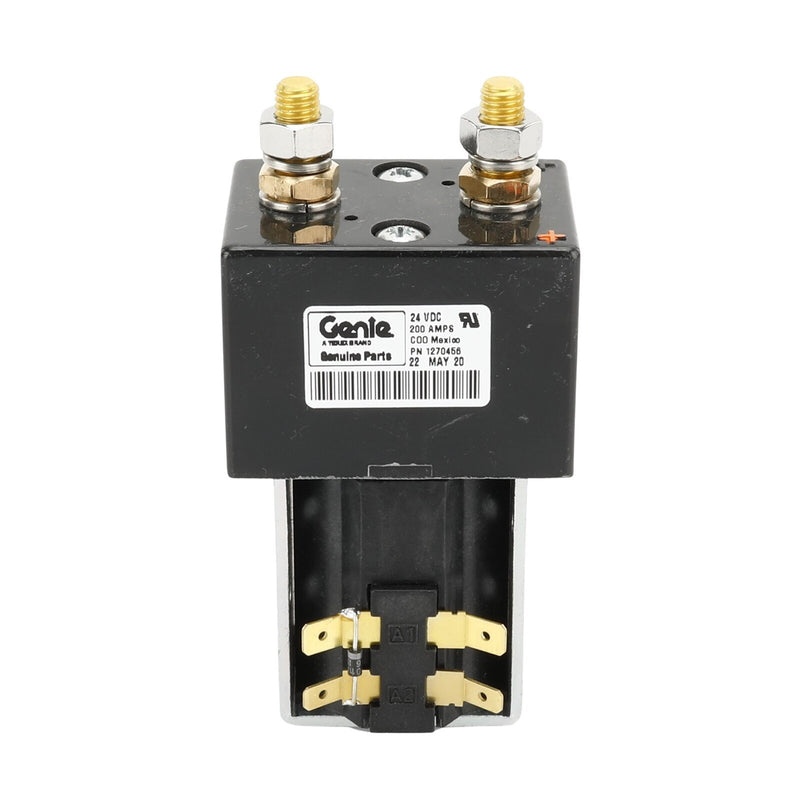
If your machine powers on but refuses to move, the problem often lies within the drive chassis components. The 24V Drive Contactor (Part No. 1270456GT or 1270457GT) is a high-wear electrical component that acts as a heavy-duty relay for the drive motors. Over time, the internal fixed and moving contacts can become pitted or welded together, leading to intermittent drive faults or a complete loss of motion. Replacing these contactors is a standard maintenance task that can prevent more expensive damage to the drive motors.
Similarly, the 48V DC Drive Motors themselves require periodic inspection. A "Motor Fault" error often points to worn motor brushes (Part No. 58932GT) or a failing brush lead assembly (Part No. 65872GT). If you notice a loss of torque or "jerky" drive behavior, it is essential to check the brush set before the commutator end of the motor is damaged. We stock complete brush kits and motor bearings to help you rebuild these motors rather than replacing the entire unit.
Platform Interface Issues: Joysticks and Switches
The operator's primary point of contact is the Platform Control Box, where errors are often first noticed via indicator lights [602.1, 883]. If the Drive Enable indicator light (Part No. 824878GT) fails to illuminate when the boom is rotated past the non-steer tires, the machine will not drive. This is frequently caused by a faulty Drive Enable Limit Switch (LS3) or a break in the LS3 harness (Part No. 110637GT).
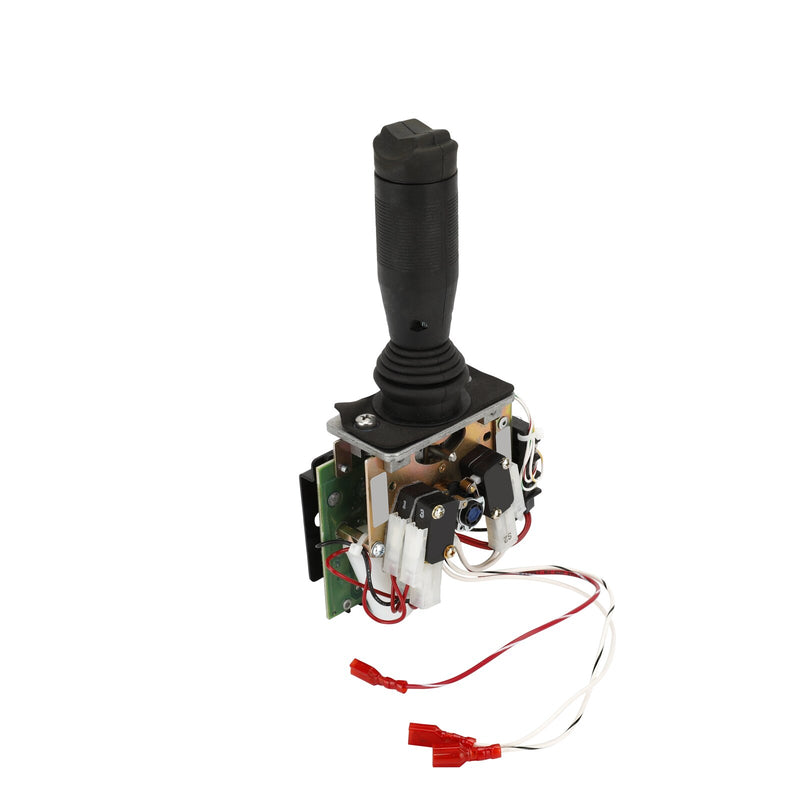
The Joystick Controller is another critical failure point [604.1, 888]. The Part No. 42032GT OEM joystick uses a complex arrangement of microswitches (Part No. 19722GT) and a potentiometer to provide proportional control. A fault in the joystick's "neutral" position will prevent the machine from starting its function sequence. For many older models, we offer aftermarket joystick replacements (Part No. 42032HGT) that provide OEM-level performance at a competitive price point.
Safety System Alarms: Tilt and Overload Faults
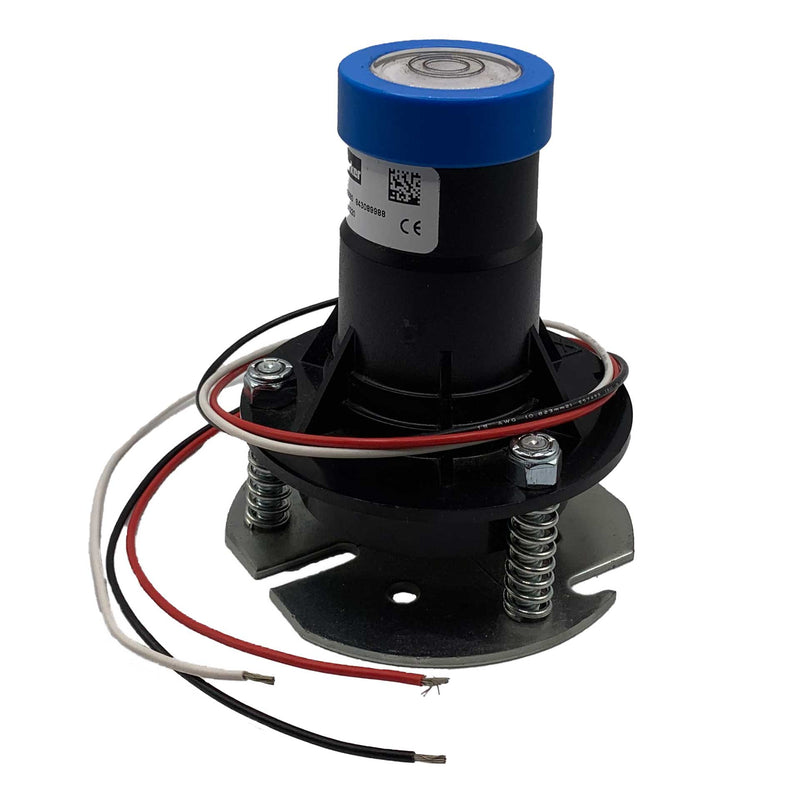
Genie machines are equipped with rigorous safety systems, including tilt sensors and platform overload sensors. If the "Machine Not Level" indicator light is active, the machine will limit its speed or reach to prevent a tip-over. This system relies on the LS60 Level Sensor (Part No. 40836GT). If the sensor is misaligned or the tilt harness (Part No. 1261845GT) is damaged, the machine may falsely trigger a tilt alarm even on level ground.
For machines equipped with the Platform Overload Option, a fault will occur if the weight in the basket exceeds the rated capacity, typically 500 lbs. This system utilizes a load support weldment (Part No. 101512GT) and a specific limit switch (Part No. 61973GT) to monitor boom stress. If you encounter a platform overload fault with an empty basket, inspect the overload springs (Part No. 61974GT) and ensure the roller plunger limit switch is moving freely.
Hydraulic Sluggishness and Manifold Faults
While not always producing a digital error code, "sluggish" behavior is a common mechanical fault. The Function Manifold is the heart of the hydraulic system, containing various solenoid valves and relief valves. If a specific function, such as "Primary Boom Up," fails, it is often due to a burnt-out solenoid coil (Part No. 40413GT) or a stuck solenoid valve (Part No. 52599GT).
Contamination is the primary enemy of these valves. The 10-micron filter element (Part No. 44788GT) should be changed regularly to protect the proportional valve (Part No. 40410GT), which regulates the overall flow of the system. If functions are slow across the board, the 3CC Lift Pump (Part No. 77981GT or 1295585GT) may be failing to maintain the necessary 3200 PSI system pressure.
Navigation the Serial Number Breaks
When ordering Genie replacement parts to solve these errors, the most important piece of information you have is your model serial number. Genie implemented numerous design changes over the years that affect part compatibility.
-
Early Models: Serial numbers up to 1931 are covered by manual 35533.
-
Mid-Range Models: Serial numbers 1932 to 15132 are covered by manual 74117.
-
Later Models: Serial numbers Z30N13-15133 to 18899 and from Z30NF-18900 are covered by manuals 1262611 and 1263378GT respectively.
-
Hybrid Units: The D-Series Hybrid (e.g., SN Z30ND-200) requires parts from manual 1285596GT.
Choosing a part from the wrong serial range—such as a terminal rail assy (Part No. 216788GT) when your machine requires the newer 1259574GT—can lead to wiring mismatches and new error codes.
Why Choose Reliable Equipment Parts?
At Reliable Equipment Parts, we don't just sell components; we provide the technical support needed to troubleshoot your Genie lift effectively.
-
Fast Shipping: We offer rapid shipping across the USA and Canada to minimize your downtime.
-
Comprehensive Stock: From limit switches to complete manifolds, we maintain an extensive inventory of OEM and aftermarket parts.
-
Expert Knowledge: Our team can help you navigate manual revisions and find the exact part number for your specific serial range.
Troubleshooting Summary Table
|
Fault Symptom |
Potential Root Cause |
Required Genie Part |
|
No Drive/Steer |
Worn Drive Contactor |
|
|
No Drive Enable |
Faulty LS3 Switch |
|
|
Tilt Alarm Active |
Bad Level Sensor |
|
|
Sluggish Functions |
Clogged Return Filter |
|
|
Dead Controls |
Blown 10A Breaker |
|
|
Intermittent Motion |
Worn Motor Brushes |
Conclusion
Don't let a mystery error code keep your Genie Z-30/20N on the sidelines. By identifying the symptomatic part—whether it's a joystick controller, a limit switch, or a hydraulic pump—and matching it to your serial number, you can ensure a successful repair.
Ready to get back to work? Browse our full selection of Genie Lift Parts here or call our experts at (866) 823-8688 for personalized assistance. We are your trusted partner for staying safe and staying reliable.