Skip to the content

For any fleet manager or owner-operator, the Genie Z-62/40 articulating boom lift is a versatile workhorse, capable of reaching heights of 62 feet and offering a horizontal outreach of over 40 feet. However, like any complex piece of heavy machinery, the Z-62/40 relies on a sophisticated network of electronic control modules (ECMs), sensors, and hydraulic valves to operate safely. When a system fails, the machine's onboard diagnostics will trigger an error code.
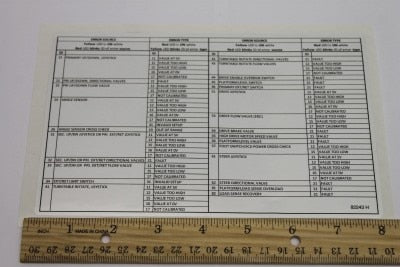
At Reliable Equipment Parts, we understand that a flashing light or a code on an LCD screen can mean a complete halt to your project. This guide covers the common systems that trigger fault codes on the Z-62/40, how to identify them using the 82243GT Fault Code Decal, and the specific Genie replacement parts you need to get back to work.
The Diagnostic Hub: Ground and Platform Controls
Before diving into specific codes, it is essential to know where to find them. Depending on your serial number range, your Genie Z-62/40 is equipped with different control interfaces.
Ground Control LCD Readout
Later models and those with specific engine packages, such as the Deutz TD 2.2 L3 or the Deutz D2.9 L4 China IV, feature an LCD Readout Screen at the ground control box. This screen is the primary point for viewing active fault codes. For machines equipped with the DP200 display (Part No. 1251985GT), the screen provides real-time feedback on engine parameters and system health.
The Fault Code Decal (82243GT)
Every Z-62/40 should have the Fault Code Decal (Part No. 82243GT) located near the controls. This decal is your "Rosetta Stone" for translating flashes and numerical codes into actionable data. If this decal is missing or illegible, it should be replaced immediately to ensure your operators can diagnose issues in the field.
1. Tilt and Leveling Faults: The "Not Level" Indicator
One of the most common issues on a boom lift involves the tilt sensor. Safety is paramount, and if the machine detects it is on a slope exceeding its safe operating limit, it will trigger an alarm and may cut out certain functions.
Common Symptoms:
-
Red "Machine Not Level" Indicator Light (Part No. 824879GT) flashes on the platform control box.
-
Tilt Alarm (Part No. 45383GT) sounds a warble tone.
The Solution:
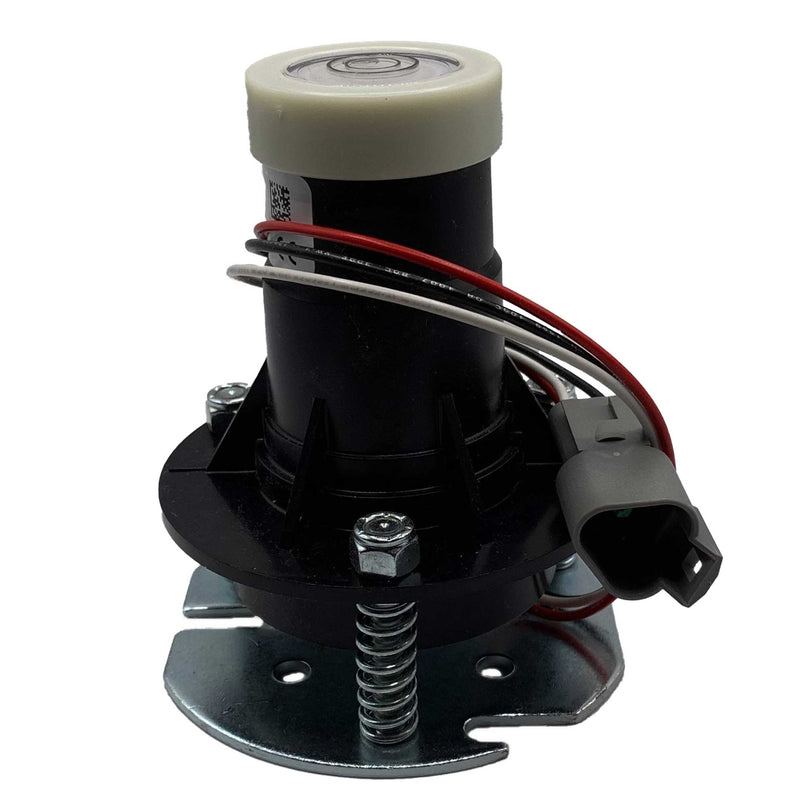
The heart of this system is the Level Sensor (Part No. 94077GT), often identified by a white ring. This sensor monitors the angle of the chassis. If the sensor is failing or out of calibration, it will send a continuous "not level" signal to the ECM.
-
Replacement Part: Sensor, Level, 4.5 Deg (94077GT).
-
Installation Tip: Always ensure the mounting surface is clean and the sensor is oriented correctly according to the machine's axis.
2. Engine Control Module (ECM) and Communication Errors
The Z-62/40 utilizes several engine types, including the Perkins 404F-22, Deutz D2.9L4, and Ford MSG-425. Each of these engines has a dedicated ECM that communicates with the Genie's main controller.
Perkins 404F-22 Faults
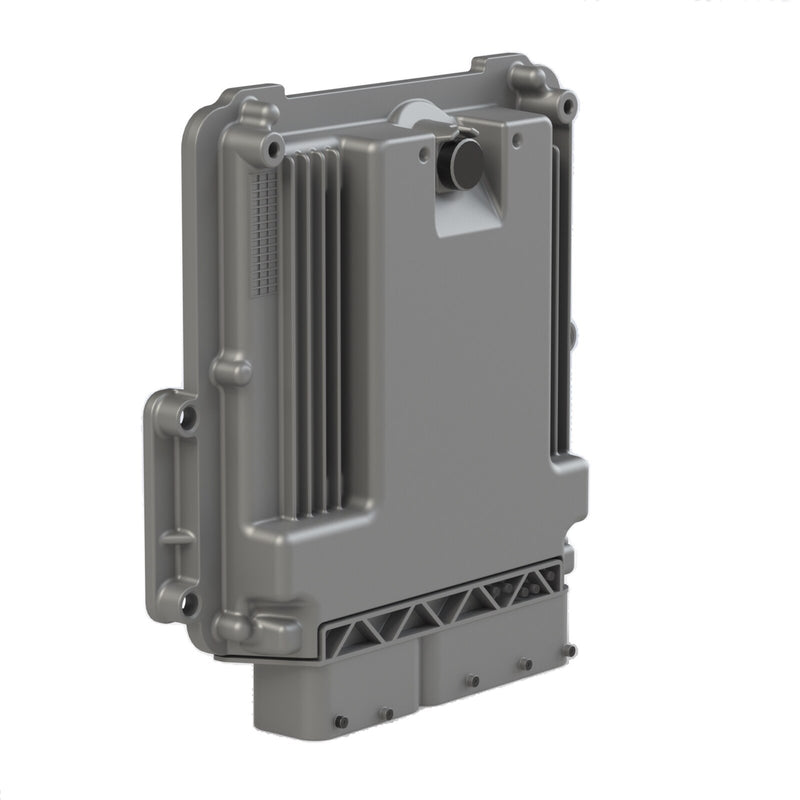
Communication errors between the machine and the Perkins ECM (Part No. 216065GT) are often caused by wiring harness issues or a faulty ECM.
-
Critical Note: Many Perkins and Deutz engine parts are Tier 4 or Stage V compliant, meaning you MUST provide your engine serial number when ordering to ensure the ECM is programmed correctly.
Deutz D2.9L4 Diagnostics
If your Deutz engine is running roughly or throwing "Check Engine" codes, inspect the Sensor, Intake Air Pressure (1262896GT) and its corresponding O-ring (1262897GT). A vacuum leak or a failed pressure sensor will trigger a fault code that limits engine RPM.
-
Replacement ECM: ECM, Deutz (214795GT).
Ford MSG-425 EFI Faults
For gas/LPG models, the Ford Control Module (Part No. 1294827GT) manages fuel injection and ignition. If the machine fails to start or switches between fuel types poorly, the problem may lie in the Relay, Power/Fuel (128165GT) or the Relay, Starter (128166GT).
3. Platform Control Malfunctions (ALC500 System)
If the ground controls work but the platform controls are unresponsive or behaving erratically, the issue is likely within the Platform Control Box.
The Solution:
The primary "brain" inside the platform box is the ALC500 PCB Assembly (Part No. 824665GT). This circuit board processes joystick inputs and sends them down the Cable Track to the function manifold.
-
Diagnostic Check: Inspect the Harness, PBox (Part No. 1278382GT) for pinched or frayed wires, especially where the harness enters the platform.
-
Replacement Part: Assy, PCB ALC500 Z62 (824665GT).
4. Boom Function and Limit Switch Faults
The Genie Z-62/40 uses a series of limit switches to monitor the position of the primary and secondary booms. If a switch fails to trigger when the boom is retracted or stowed, the machine may "think" it is in an unsafe configuration and throw a code.
Common Limit Switches:
-
Boom Protect/Retract Switch (88356-11C03GT): Monitors if the primary boom is fully retracted.
-
Limit Switch with Roller Arm (88356-11105GT): Used in various pivot points to detect boom angle.
-
Solution: If the boom won't extend or the "speed" is restricted, check the Cable Track (Part No. 825474GT or 1272543GT). A broken wire inside the track is a common cause of intermittent limit switch codes.
5. Load Sense System Faults
To comply with modern safety standards (especially CE and newer ANSI models), many Z-62/40 lifts are equipped with a Platform Overload Option. If the platform is overloaded, the system will trigger a fault and disable all functions.
Components Involved:
-
Load Sense Module (Part No. 128045GT): Located in the ground control box, this module processes weight data.
-
Relay, Time Delay (121846GT): Helps manage the signal timing to prevent "nuisance" trips from sudden movements.
-
Solution: If the machine is stuck in an "overload" state despite a light platform, the Assy, LS, Load Sense (121848GT) may be physically damaged or require recalibration.
6. Hydraulic Pressure and Manifold Faults
Fault codes related to "Function Pump" or "Traction" often point toward the hydraulic manifolds. The Z-62/40 utilizes a Function Manifold and a Traction Manifold to direct oil.
Solenoid Valve Failures:
If a specific function (like "Jib Up") is failing, the Solenoid Valve (Part No. 122645GT) or its Seal Kit (122120GT) might be the culprit.
-
Diagnostic Tip: You can often swap identical coils on the manifold to see if the fault follows the coil. If it does, replace the Coil (104759GT).
Essential Inventory for Avoiding Fault-Related Downtime
To keep your Genie Z-62/40 running strong, Reliable Equipment Parts recommends keeping a "Survival Kit" of common electrical components on hand. Many "ghost" codes are caused by simple relay or fuse failures.
Recommended Spare Parts List:
-
Relay, SPDT, 12V (34052GT): The most common relay in the machine; used in ground controls, platform controls, and lift/drive cutouts.
-
Circuit Breaker, 15A (147090GT): Protects the main control circuits.
-
Fuse, 60AMP (Part No. 1251508GT): Found in the engine fuse and relay modules for Deutz and Perkins engines.
-
Diagnostic Display (1271076GT): A plug-and-play J1939 display that can help you read engine codes on older Tier 3 models.
Conclusion: Quality Parts are the Best Solution
Error codes are the machine's way of asking for help. While some codes require a technician's expertise, many solutions involve simply replacing a worn limit switch, a faulty relay, or a clogged hydraulic filter.
When the screen on your Genie Z-62/40 starts flashing, turn to Reliable Equipment Parts. We stock the sensors, ECMs, and control boards mentioned in this guide, helping you minimize downtime and maximize safety.
Search our extensive catalog at ReliableEquipmentParts.com for your specific serial number range to find the exact Genie part you need today!
Disclaimer: Always consult your official Genie Service Manual and a qualified technician before performing electrical or hydraulic repairs. Ensure all safety protocols, including boom bracing and battery disconnection, are followed.