Skip to the content

When your Genie articulated boom lift stops moving on a busy job site, every minute counts. At Reliable Equipment Parts, we know that understanding why your machine is throwing a fault is the first step toward getting back to work. While newer Genie lifts utilize digital displays to show specific alphanumeric error codes, many models in the Z-34/22 and Z-40/23 series rely on diagnostic lights and system sensors to indicate where a failure has occurred. This guide explores common diagnostic indicators, the faults they represent, and the Genie replacement parts you need to resolve them.
1. Tilt Alarm and Level Sensor Faults
One of the most common safety interruptions involves the tilt alarm. If your machine is on a slope exceeding its rated limit, the system will trigger an alarm and may cut off certain boom functions to prevent a tip-over.
The Symptom: An intermittent or continuous warble tone (part 18963GT or 65520GT) sounds when the boom is raised.
The Component: For machines from SN 10370, the Tilt Alarm Kit (1285812GT) is a frequent point of service.
The Solution: First, ensure the machine is on a firm, level surface. If the alarm persists on level ground, the Level Sensor may be out of calibration or faulty. You may also need to inspect the Tilt 24V Harness (1261845GT) for damage. Replacing a damaged Decal (114248GT) that explains the tilt alarm system is also vital for safety compliance.
2. Platform Overload and Load Sense Faults
Regulatory requirements (specifically CE and AUS standards) often require Platform Overload systems. If the system detects weight in the platform that exceeds the rated capacity, all functions will stop.
The Symptom: The machine becomes unresponsive, and a "Platform Overloaded" light flashes on the control box.
The Component: This system relies on a Load Sense Harness (147389GT) and specific sensors located at the platform support.
The Solution: Reduce the platform load immediately. If the fault persists with an empty platform, inspect the Platform Support Weldment (94176GT) and the Load Sense Recovery Harness (218602GT). For machines working in harsh environments, ensuring the Cylinder Bellows (128838GT) are intact can prevent grit from interfering with sensitive sensing components.
3. Drive Enable and Steering Faults
The Drive Enable system is a critical safety feature that prevents accidental movement when the boom is rotated past the steer wheels.
The Symptom: The machine will not drive, and the Drive Enable Indicator Light (824879GT) is illuminated.
The Component: This system utilizes a Limit Switch (88356-12103GT) located near the turntable rotator.
The Solution: Rotate the boom until it is centered between the steer wheels, or use the Drive Enable toggle switch on the platform. If the drive function remains disabled regardless of boom position, the limit switch or its Pigtail Harness (110232GT) may be faulty.
4. Engine Faults: Oil Pressure and Heat
For the Genie Z-34 IC and Bi-Energy models, engine health is monitored by simple but effective sensors. A fault here often prevents the engine from starting or causes it to shut down abruptly.
The Symptom: The engine shuts down shortly after starting, or the "Engine Fault" light illuminates.
The Component: The Kubota Low Oil Pressure Switch (839190GT) is a standard failure point that protects the engine from catastrophic damage.
The Solution: Check your oil level immediately. If the level is correct, the pressure switch may be faulty. Ensure you are using a high-quality Kubota Oil Filter (866400GT) to maintain proper flow. In cold weather, an engine that fails to start may simply need a Freeze Plug Heater (70683GT) or a Battery Blanket (28853GT) to reach operating temperature.
5. Hydraulic Function Faults and Manifold Sticking
If your boom functions (lift, extend, rotate) are sluggish, jerky, or completely non-functional, the issue often lies within the Function Manifold.
The Symptom: A specific function (e.g., Secondary Boom Up) fails while others work perfectly.
The Component: Each function is controlled by a Solenoid Valve (139560GT) and a corresponding Coil (119827GT).
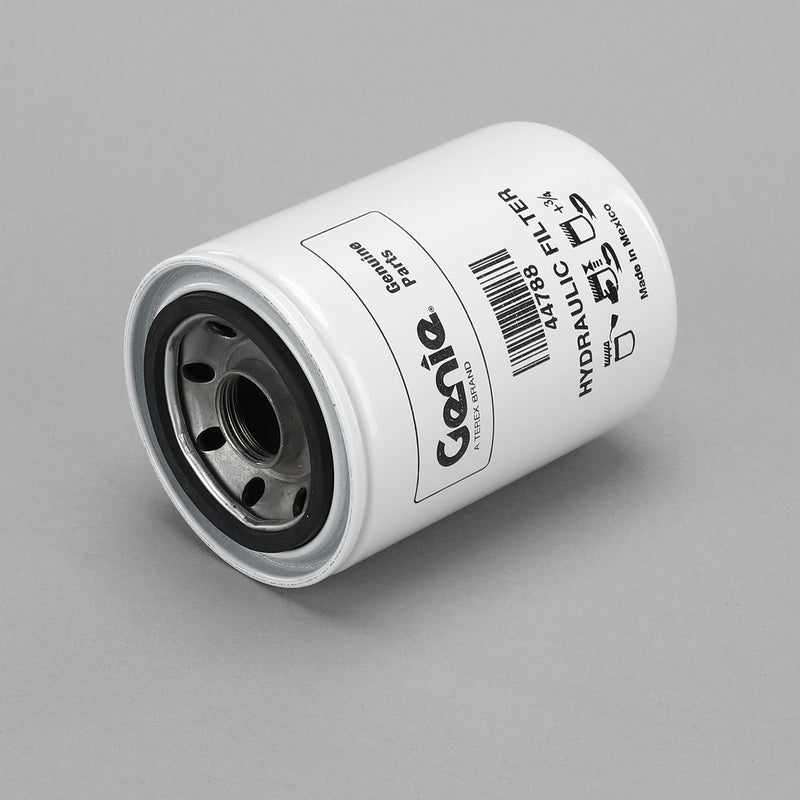
The Solution: You can often diagnose a bad coil by swapping it with a known working one on the same manifold. If the function returns, replace the faulty Coil (119827GT). If the valve is sticking mechanically, a Seal Kit (72047GT) may be required to rebuild the valve internal. Regularly replacing the 10-Micron Hydraulic Filter Element (44788GT) is the best way to prevent valve contamination.
6. Joystick and Platform Control Issues
The Joystick Controller is the most abused part of any aerial lift. It converts manual input into electrical signals for the TCON (Turntable Controller).
The Symptom: The machine drives in one direction but not the other, or the steering is non-responsive.
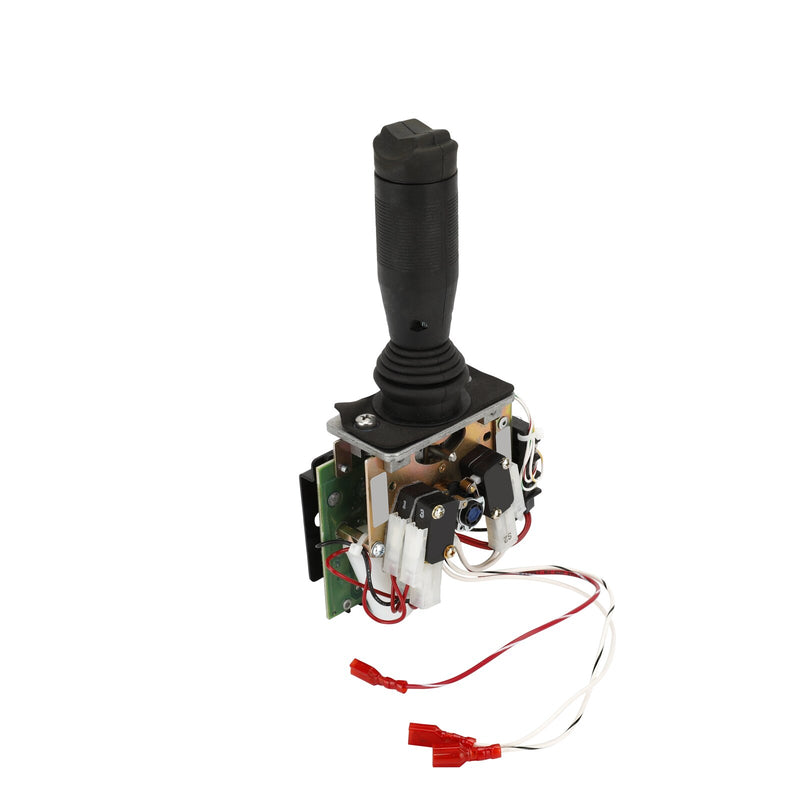
The Component: The Joystick Controller (42032GT) often fails due to a torn Boot (43038GT) allowing moisture into the internal Microswitches (19722GT) or the PCB (43045GT).
The Solution: Inspect the joystick for mechanical "dead spots." If the joystick is unresponsive, check the DT Connector Seal (128000GT) for signs of corrosion. Replacing the entire Joystick Assembly is often more cost-effective than rebuilding, but we also stock the Rocker Assembly (58986GT) for those looking to repair the thumb-steer function.
7. Power and Charging Faults
For Electric (DC) and Bi-Energy models, battery health is the foundation of machine performance.
The Symptom: The machine operates slowly, or the batteries do not seem to hold a charge.
The Component: Large fast-acting fuses, such as the 500 Amp Fuse (43179GT) or 200 Amp Fuse (18576GT), protect the main power circuit.
The Solution: Check for blown fuses in the battery compartment. If the charger is not working, verify the Battery Charger (part numbers vary by SN, e.g., from Z34N09-8702) is receiving AC power. Ensure all Battery Cables (52871GT) are tight and free of corrosion, as high resistance can trick the controller into thinking the batteries are dead.
The Importance of Manuals and Serial Numbers
One of the biggest "faults" a technician can make is ordering the wrong part. Genie machines have undergone numerous changes throughout their production runs. For example, a Z-34/22N from serial number 2227 to 10885 uses different components than those from later production runs.
When you call Reliable Equipment Parts, always have your full model name and serial number ready. Whether you need a Connecting Link (50479-SGT) for a Z-40 or a Swing-Out Engine Plate (56092GT) for a Z-34 Bi-Energy, we use the same official Genie Parts Manuals (like 106046GT, 119818, and 1265425) to ensure compatibility.
Conclusion: Reliable Parts for a Reliable Machine
Troubleshooting your Genie Z-34 or Z-40 doesn't have to be a guessing game. By understanding the common failure points—from Kubota fuel solenoids (1305362GT) to Boom Wear Pads (1262353GT), you can perform targeted repairs that keep your equipment safe and compliant.
Reliable Equipment Parts is your dedicated partner for keeping your Genie fleet operational. We stock everything from Joystick Controllers and Solenoid Valves to complete Decal Kits (72978GT) to keep your machine looking and working like new. Visit our online store today to find the exact parts you need by part number or category. Stay safe, stay productive, and stay reliable!